Trichollective Conference Review
Charlotte Knibbs RIT
Consultant Trichologist & Director, Verve Hair Loss Specialists UK | Pastoral Tutor | Institute of Trichologists
23rd June 2026
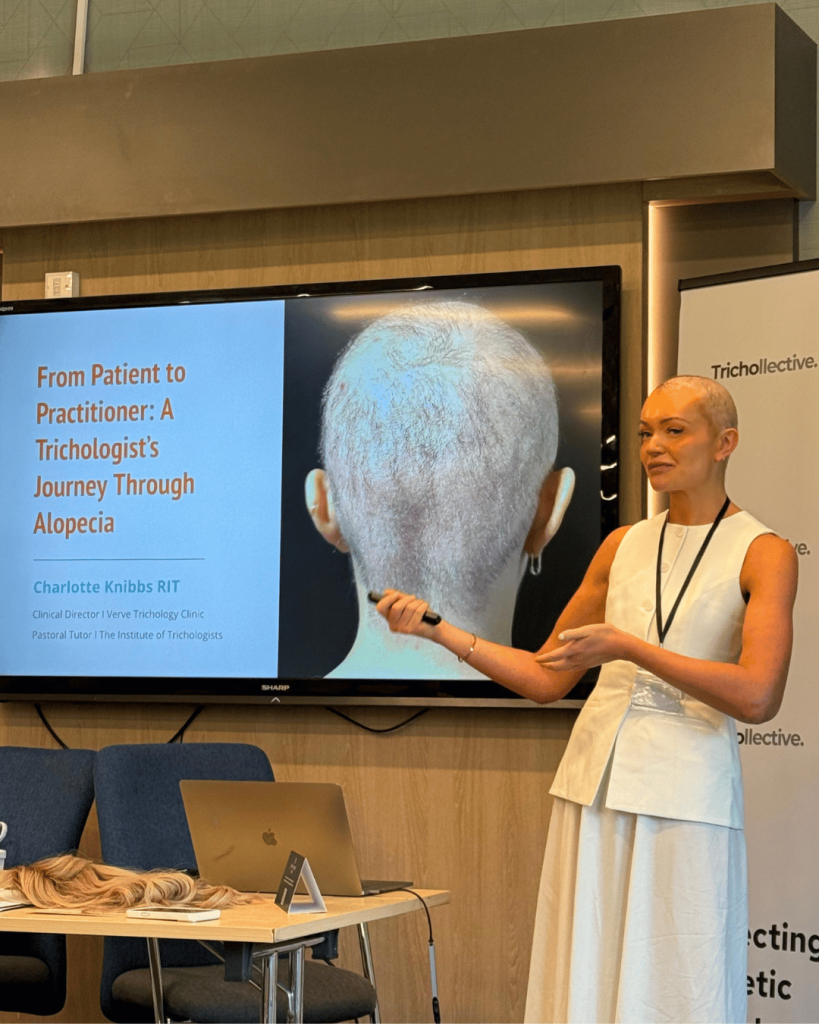
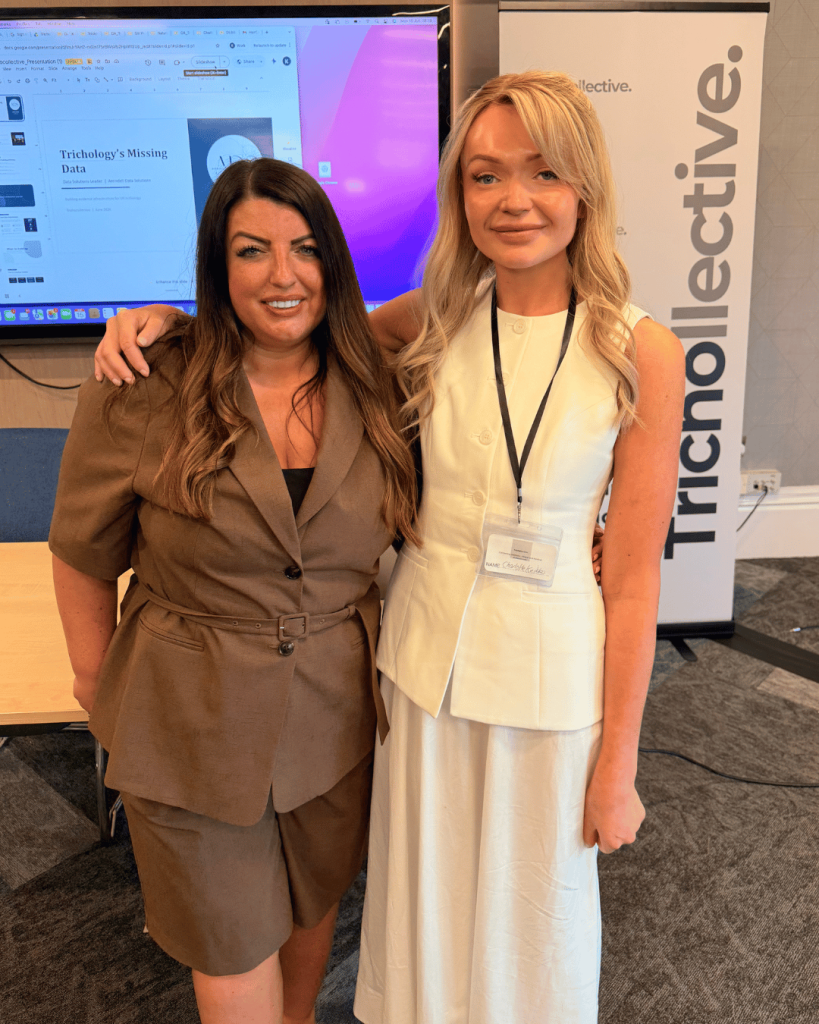
On 15th June, I attended the Trichollective Conference at Whittlebury Park Hotel & Spa, which brought together professionals from across the hair and scalp industry for a day of learning and collaboration. The programme featured a diverse range of speakers and topics, including hair biology, patient perspectives, non-surgical hair restoration, and the development of a UK trichology database to support clinical decision making and strengthen research within the profession.
The conference was organised by Karley Weir who kindly asked me to come and speak about my experiences as both an alopecian and a trichologist. My presentation explored the psychosocial impact of visible difference and how this experience has shaped my approach to patient-centred care. The aim of my presentation was to raise awareness of Epidermolysis Bullosa (EB) and its potential relevance to both trichological practice and hair loss solution providers, should patients with the condition seek support for hair and scalp concerns.

Epidermolysis Bullosa (EB) is a group of rare genetic skin fragility disorders, each caused by specific gene mutations compromising the structural integrity of the skin. Whilst EB prominently results in severe blistering, wounds, scarring, and chronic inflammation, a secondary incidence of hair loss and hair abnormalities can arise which present several features relevant to trichological practice. These features largely depend on the EB subtype and wound-healing processes, but factors such as structural integrity, as well as nutritional deficiencies which are extremely common in EB are worth considering. Drawing on my own lived experience of Epidermolysis Bullosa Simplex Generalised Severe (EBS-GS) caused by a mutation in my KRT14 gene, I reviewed the role that this may have played within my own alopecia given the relevance of keratin 14 expression in the outer root sheath.
One of the key messages I hoped to convey through my presentation was that, although hair loss may seem secondary when compared with the pain, wound care and clinical complexities of Epidermolysis Bullosa, it can still have a profound impact on self-image and confidence. I hope this is the beginning of a wider conversation about hair loss in EB, and how trichologists may be able to help improve awareness and support available to patients. The conference provided a welcoming and engaging environment, and it was a pleasure to connect with colleagues and contribute to discussions throughout the day.